Ready for an essential new career? You can get the training you need in months, not years!
"*" indicates required fields
This Is Maritime Welding Training You Can Launch With.
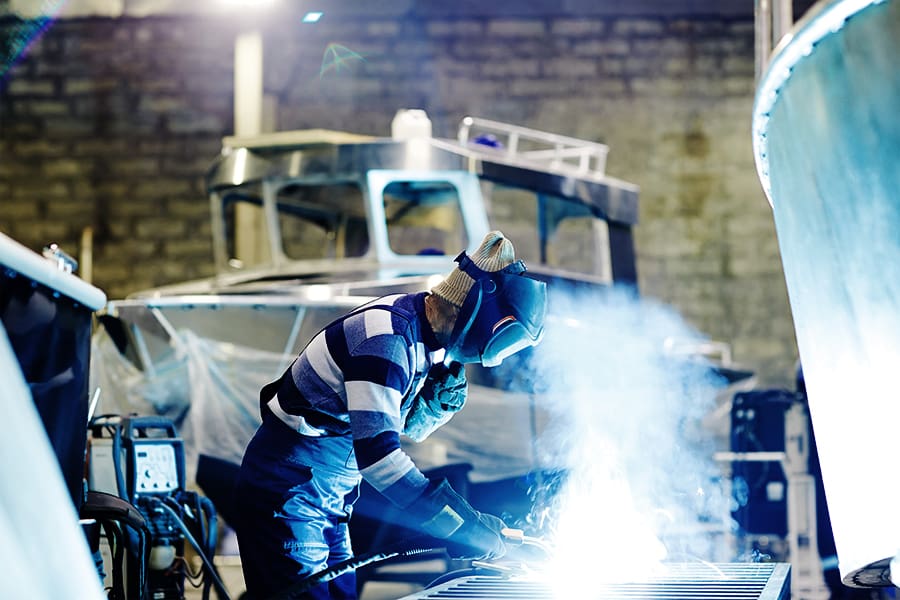
Hampton Roads is one of our nation’s biggest shipping ports, and certified combination maritime welders keep those massive ships and barges sea-worthy every day. There are lots of opportunities for maritime welders here in Norfolk, as well as in shipyards and ports all around the world. If you’re looking for an adventurous career with the chance to travel and earn a good living, check out Tidewater Tech’s Combination Maritime Welding Program.
Learning a skilled trade, like combination maritime welding, can be your way out of low-paying, dead-end jobs, and help you chart a course toward success and stability. And if you’re worried that you can’t afford training, don’t be. We offer financial assistance programs to those who qualify. Explore your passion for ship building, metal fabrication and repair, and watch your investment in training quickly pay off.
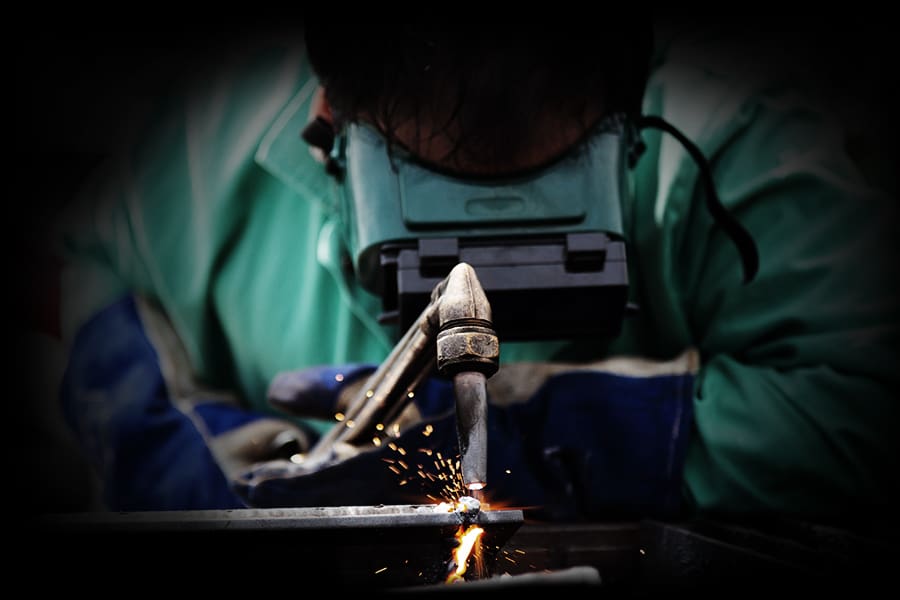
When you enroll in Tidewater Tech’s Combination Maritime Welding Program, you’ll learn the fundamentals of welding with a focus on the specialized processes involved in the shipbuilding industry. Our supportive, experienced instructors will help you master various welding and metal cutting techniques, different tools and machines, as well as becoming skilled at reading blueprints, taking measurements and assessing hazards.
Best of all, as a full-time student, you could graduate in 48 weeks!
Train hands-on in our new, state-of-the-art welding facility, and before you know it, you could be keeping our nation’s fleet afloat. If you long for nautical life, are good with your hands, and want a secure career that’s always in demand, it’s time to enroll in Tidewater Tech’s Combination Maritime Welding Program.
As a graduate of our Combination Maritime Welding Program, you’ll be ready to put your new PROGRAM skills to work at countless locations, and advance into a number of positions, including:
Whether you are a new student who wants a competitive edge in the job market, or someone who’s already in the workforce who wants to take their career to the next level, there are a number of certifications that combination maritime welders can pursue.
Flux Core Arc Welding (FCAW) in 3G and 4G positions
Flux Core Arc Welding (FCAW) in 3G and 4G positions using 3/8-inch-thick ASTM A 36 carbon steel plate
Gas Tungsten Arc Welding (GTAW) in 6G position using 6-inch diameter ASTM A36 carbon steel pipe
Shielded Metal Arc Welding (SMAW) in 3G and 4G positions using 3/8-inch-thick ASTM A36 carbon steel plate
Shielded Metal Arc Welding (SMAW) in 3G and 4G positions using 1-inch-thick AASHTO M steel plate
Occupational Safety and Health Administration (OSHA) 10-Hour Maritime Shipyard Employment Safety Certification
American Welding Society (AWS) Welding Certifications in accordance with AWS D1.1 Structural Welding Code-Steel
American Welding Society (AWS) Welding Certifications in accordance with AWS D1.1 B2.1
Specification for Welder Procedure and Performance Qualification
Get the certifications you need and get on with an exciting career in maritime welding!
Take the Tidewater Tech Career Training Readiness Quiz
The fun, online quiz takes 3 minutes to complete, and you’ll get a personalized report that identifies your strengths, as well as the training and positions you’re best suited for.
Come in for a career planning session & fill out an application.
Third Step
Get your acceptance letter* & meet with a Financial Advisor & Explore Scholarships.
Fourth Step
Attend orientation & start your maritime welding program!
*Applicants must meet admission requirements. Acceptance into the program is not guaranteed.
Frequently Asked Questions
How long does it take to become a combination maritime welder?
Tidewater Tech’s Combination Maritime Welding program can be completed in approximately 48 weeks for full‑time students, covering specialized techniques used in shipbuilding and repair such as GTAW on carbon steel pipe, advanced SMAW, FCAW, special cutting, and blueprint reading.
What’s the highest-paid welding job?
One of the highest-paid welding roles is saturation diving welding, a niche within underwater welding where elite divers work at extreme depths. These specialists—such as offshore or underwater welders operating on oil rigs—can earn anywhere from $200,000 to over $300,000 per year, thanks to depth pay, hazard bonuses, and strong demand in offshore sectors, according toChron’s report on underwater welder pay scales.
How do you get into underwater welding?
Underwater welding is a specialized branch within the broader field of maritime welding, which also includes work on ships, boats, oil rigs, and other marine structures—typically in dry or surface-level conditions. To work in underwater welding, you first need foundational welding certifications (AWS codes like SMAW, FCAW, GTAW), then complete commercial diving training through an accredited program, and gain experience welding in underwater environments. Pathways often begin with surface welding, followed by diver certification and specialized underwater welding training.
To work in underwater welding, you first need foundational welding certifications (AWS codes like SMAW, FCAW, GTAW), then complete commercial diving training through an accredited program, and gain experience welding in underwater environments. Pathways often begin with surface welding, followed by diver certification and specialized underwater welding training.
How much do beginner underwater welders make?
Entry-level underwater welders typically earn between $40,000 and $60,000 annually for offshore roles, while onshore or inland positions often start around $25,000 to $40,000, depending on location and conditions—according to a recent industry salary guide.(Tentacle Tools offshore welder salary guide).